
- Details
Outdoor Recreation Idaho
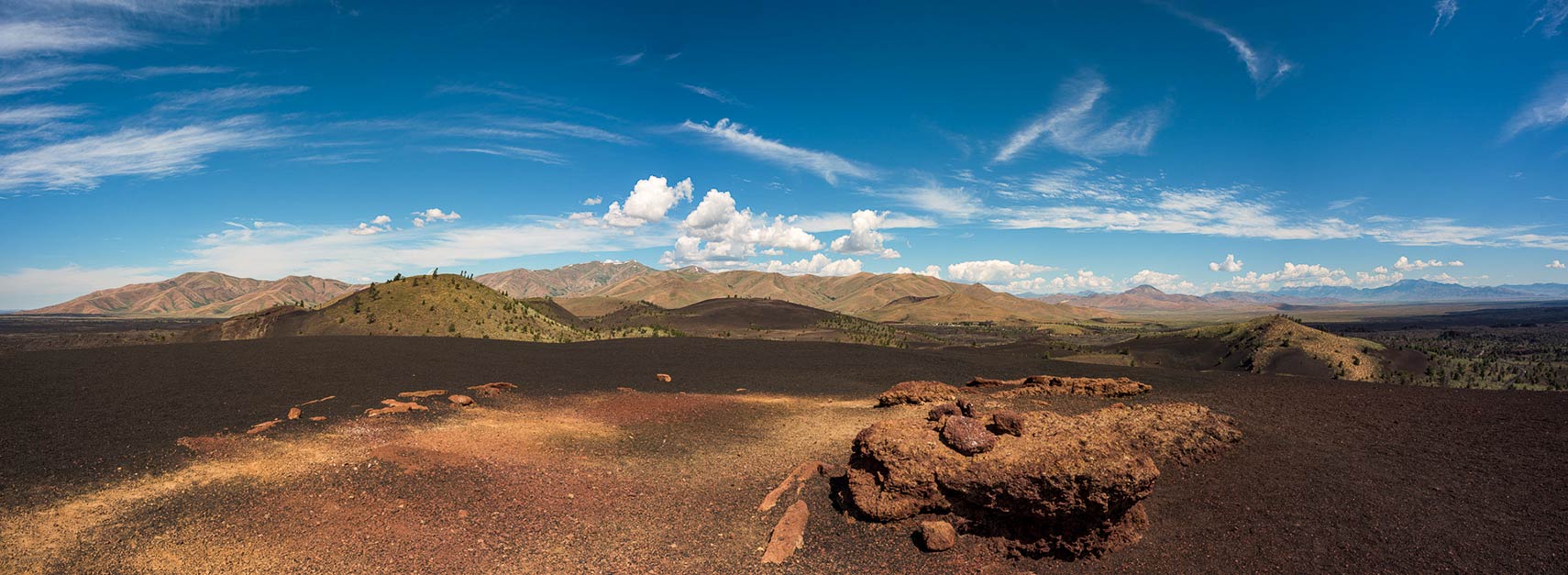
Though most often associated with potatoes, Idaho claims some of the most beautiful scenery in the West. Like its neighbors Montana, Wyoming, and Washington, it has a dramatically varied landscape—as you travel across the state, you’ll see lush, rolling valleys one minute and pine-covered mountains the next. One of the least densely populated states in the country (there is only one area code), Idaho feels blissfully remote. The magic of exploring here lies in all the surprises you’ll find along the way, including ghost towns, hot springs, and even lava fields.
When’s the best time to go to Idaho?
Idaho is a year-round state, with recreational opportunities in every season. Still, summer is when things really pick up, and campgrounds, especially in places like Stanley, can fill up fast. If you’re planning a warm-weather visit, you’d do well to reserve everything far in advance. Alternatively, you could go during the fall shoulder season, when roads are quieter, hiking trails are all but empty, and the Sawtooth Range boasts spectacular foliage.
How to get around Idaho
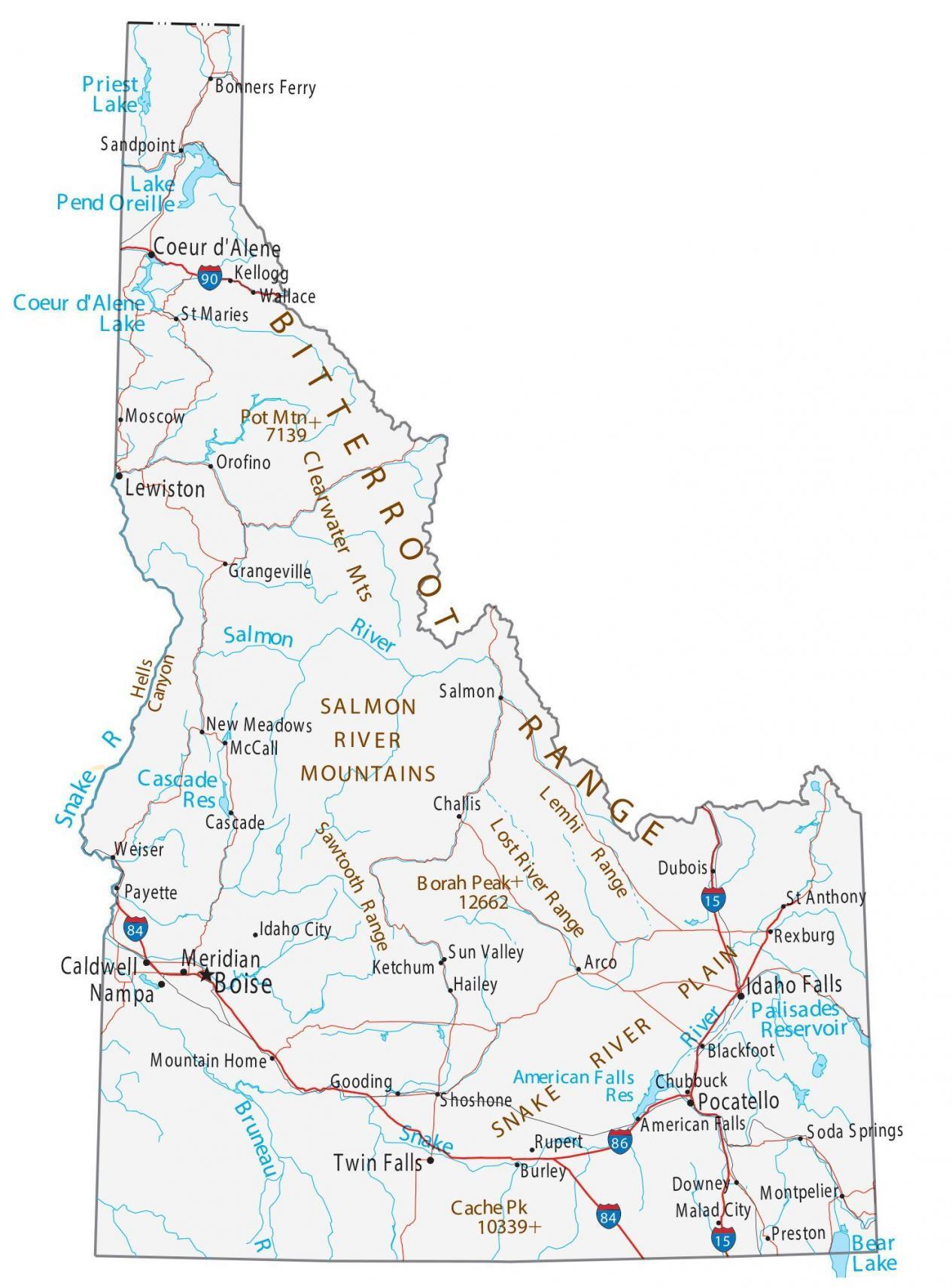
Most travelers to Idaho will arrive via the state’s largest airport in Boise. From there, it’s a relaxed—and gorgeous—drive on Highway 21 into the wilderness of Sawtooth National Forest and the iconic Ponderosa Pine Scenic Byway. For those vacationing in the northern part of the state, however, it’s easier to fly into Spokane International Airport, which sits just 22 miles from the Idaho border. And skiers should know that there are year-round direct flights from major cities like Los Angeles to Friedman Memorial Airport, near Sun Valley, with more options added during ski season.Idaho doesn’t have any trains, so if you’re traveling to several destinations within the state, you’re going to need a rental car. In winter, be sure to book a vehicle with all-wheel drive. Roads are well maintained, but can be challenging in snow.
Food and drink to try in Idaho
Idaho is known for its potatoes, and most restaurants here feature spuds in one way or another. However, thanks to its multiple rivers, the state also specializes in trout, especially around the town of Hagerman on the Snake River. Dairy is an additional point of pride, and some of the best can be found at Ballard Family Dairy & Cheese. The farm is located in Gooding, Idaho, but its products can also be found on menus and in specialty shops across the state.
Culture in Idaho
Idaho honors its rich Native American heritage in places like Hells Canyon, a fascinating depository of ancient petroglyphs left by the Nez Percé tribe, and museums like the Sacajawea Center in Salmon. For a full picture of Idaho’s past, visit the recently renovated Idaho State Museum in Boise and tour exhibits on fur trappers, Native Americans, Oregon Trail pioneers, and more.A unique festival worth traveling for is the Trailing of the Sheep, which takes place in Ketchum every October. Held to honor Idaho’s century-old tradition of Basque sheep farming (the state boasts the largest Basque community in the United States), the event draws thousands with lively music performances, sheep-shearing demos, and plenty of food and drink.
Can’t miss things to do in Idaho
If you’re visiting for the first time, head straight for Central Idaho, where you can ski at Sun Valley Resort, tour abandoned mining towns near Stanley, and stargaze in the massive Central Idaho Dark Sky Reserve. Outdoor enthusiasts willing to explore further won’t want to miss camping and hiking in the Sawtooth and Boise national forests, and, in July and August, kayaking on Redfish or Coeur d’Alene lakes.
- Details
Outdoor Recreation Arizona
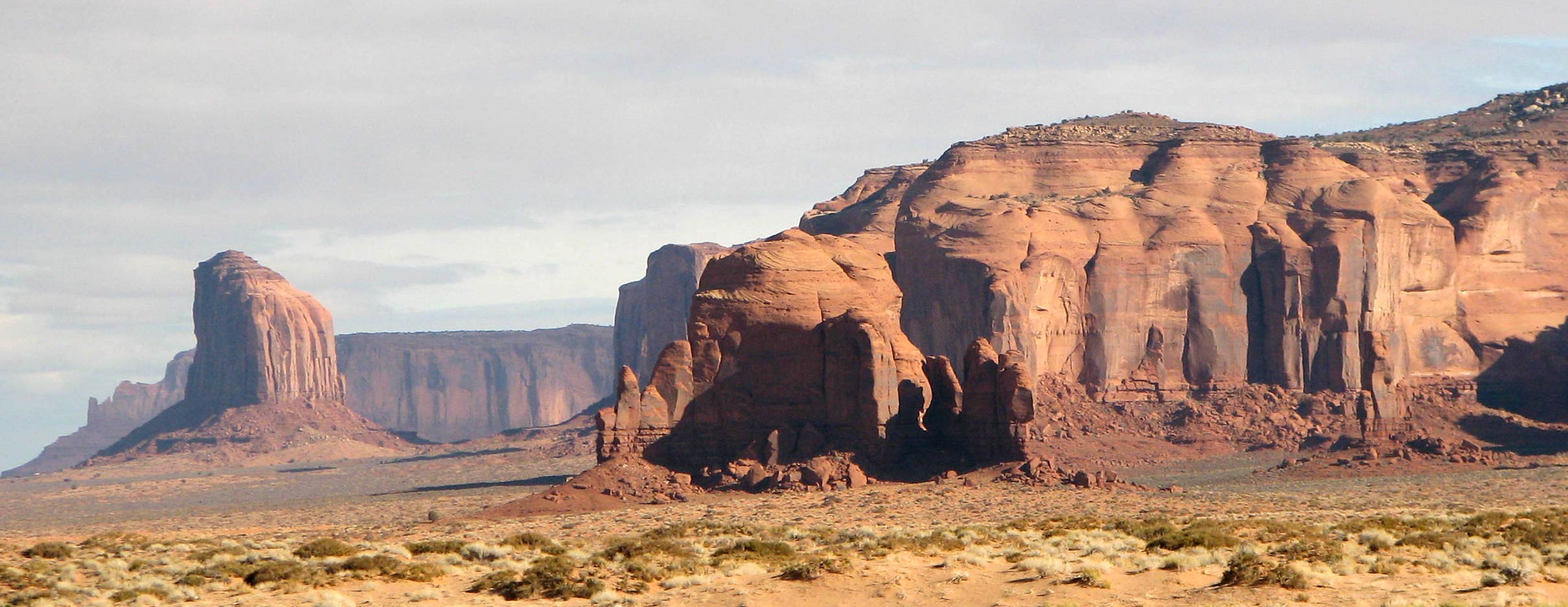
With everything from alpine forests to deserts dotted with saguaro cacti, the landscape in Arizona is mesmerizing. The state’s natural landmarks are most readily apparent, but thousands of years of human habitation have also made their mark on the terrain—many of the canals that irrigate Phoenix follow the contours of ditches dug by the ancient Hohokam people. The unwaveringly sunny weather makes an outdoor lifestyle possible year-round, and a growing food scene means you’ll be well fed during your visit. In Arizona, the Grand Canyon is really just the beginning.
When’s the best time to go to Arizona?
Visit October through early May to avoid the stifling heat. Places like the Grand Canyon and Monument Valley, which are exceedingly popular in the summer, will also be quieter in late spring or early fall. If your trip does coincide with the warmer months, the Mogollon Rim highlands offer cool relief. Meanwhile, Flagstaff is the perfect winter playground. Just remember that snowy road closures are common at higher elevations. No matter when you visit, be prepared for cool nights everywhere in the state.
How to get around Arizona
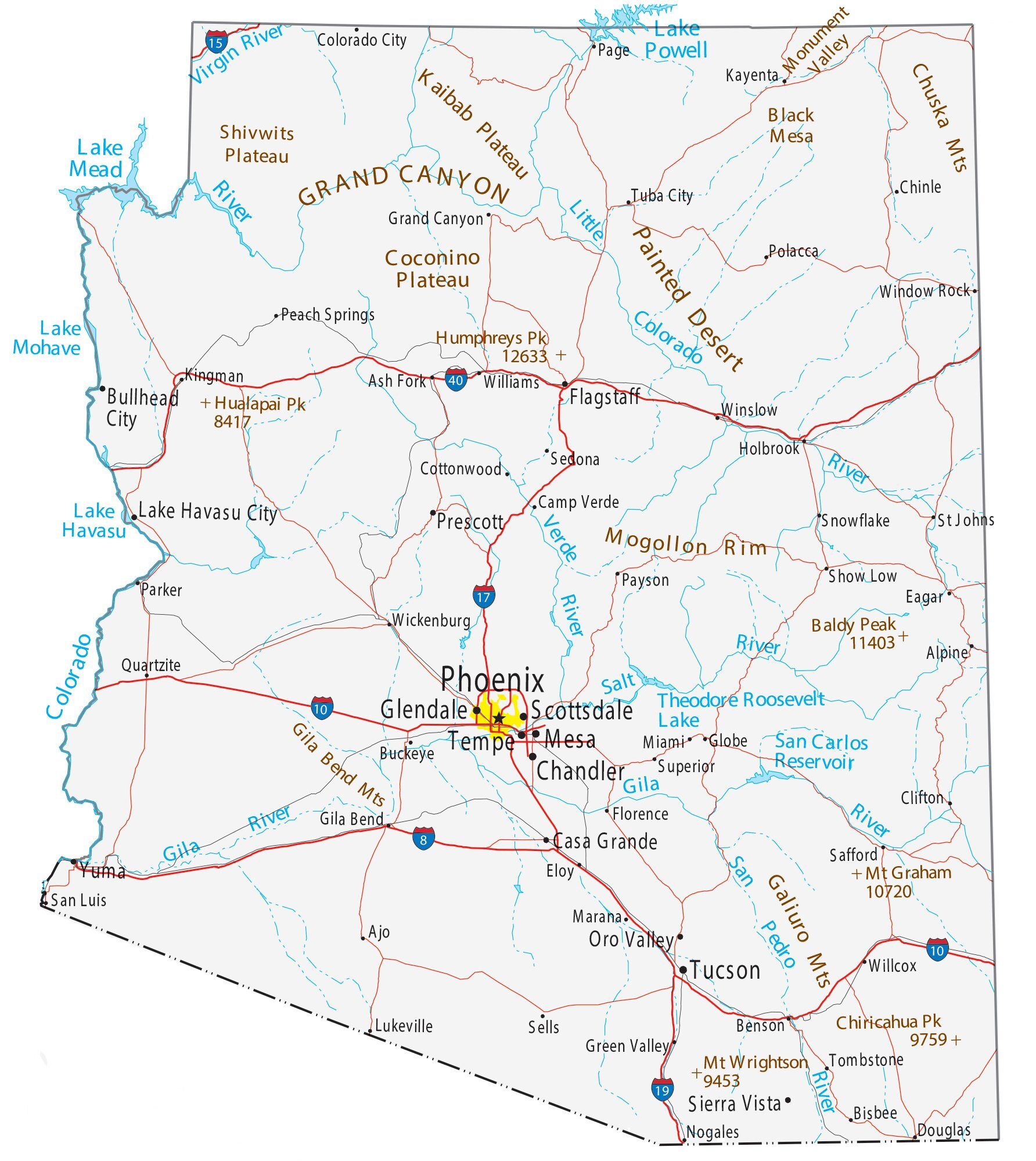
Arizona’s two major airports are in Phoenix and Tucson. By car, I-10 and I-40 are the main east–west routes across the state. El Paso to Tucson is about a four-hour drive, and from Los Angeles to Phoenix is about five and a half hours.
A car—with air-conditioning, and ideally tinted windows—is an absolute must to get around the state. Always carry extra water.
Food and drink to try in Arizona
Arizona has a burgeoning local food scene that goes far beyond Mexican and cowboy fare. Vineyards and orchards blanket higher elevations across the state, while citrus fruits and pecans thrive in the heat. Though desert covers much of the state, the sea is only a few hours away, so ceviche and sushi are as popular as chimichangas and steaks. If you want to try Southwest fusion or international cuisine, head to Tucson and Phoenix—these diverse cities do the food of many regions well. Just save room for a prickly pear margarita, and remember that guacamole and salsa are as Arizonan as red rocks and cacti.
Culture in Arizona
A historic blend of American Indian, Hispanic, and Anglo cultures makes Arizona a much more eclectic destination than many realize. Pre-Columbian ruins sit alongside modern cattle ranches, while the Mission San Xavier del Bac, a masterpiece of baroque desert architecture near Tucson, was founded by the Spanish in the 1690s and still serves as the parish church for the local Tohono O’odham nation. Arizona also has some excellent museums, such as the Heard Museum in Phoenix and the Arizona State Museum in Tucson.
In Arizona, there are even festivals for every taste and season. Winter brings the Renaissance Festival, Tucson Rodeo, Tucson International Gem and Mineral Show, Tucson Festival of Books, and the Fiesta Bowl, while the spring sees the Scottsdale Culinary Festival, Tucson International Mariachi Conference, and Country Thunder. Summer is the time for the Annual Festival of Navajo Arts & Culture, Prescott Frontier Days, and the Sedona Hummingbird Festival. And in the fall, enjoy grape-stomping at various wineries, the Arizona State Fair, and El Tour de Tucson cycling events.
Travel Tips
Summer is jaw-droppingly hot, but you can still enjoy the outdoors—just start at dawn so you can finish well before mid-morning. If you get caught in a sandstorm while driving, pull off the road and turn your lights off. Finally, when in Arizona, burritos are called burros.
- Details
Outdoor Recreation Tennessee
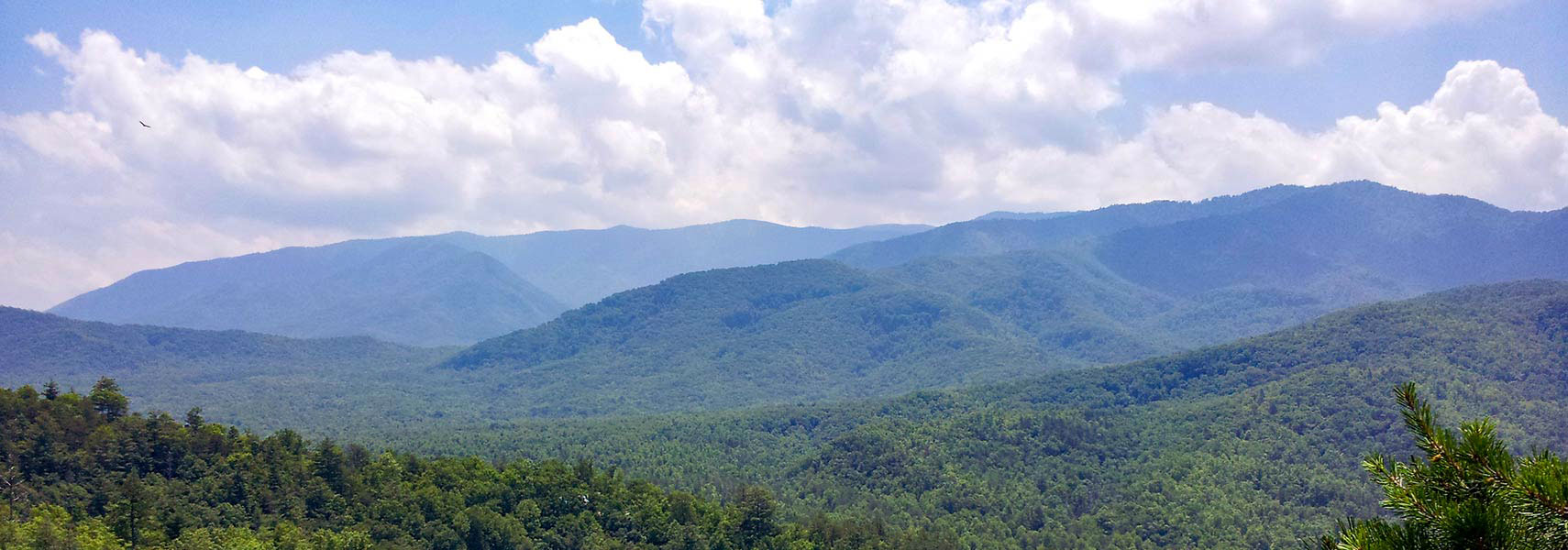
Tennessee is awash in history—it was critical to the development of several genres of music, from country and jazz to blues and bluegrass; home to some of the most important battles of the Civil War; and the site of many major events in the struggle for civil rights. Nashville and Memphis are two of the most vibrant cities for live music in the country. Outdoor buffs can enjoy numerous hunting and fishing opportunities as well as several state and natural parks, including the most-visited national park in the country, the Great Smoky Mountains National Park.
When’s the best time to go to Tennessee?
As in many Southern states, summers in Tennessee are muggy, with high humidity and temperatures that can make being outdoors pretty intolerable. Winters are comparatively mild—except for in mountainous Eastern Tennessee—though they can also be quite wet. Fortunately, the shoulder seasons of spring and fall are glorious, with wildflowers blanketing the rolling hills of Middle Tennessee in May and brightly colored leaves painting the eastern forests come October.
How to get around Tennessee
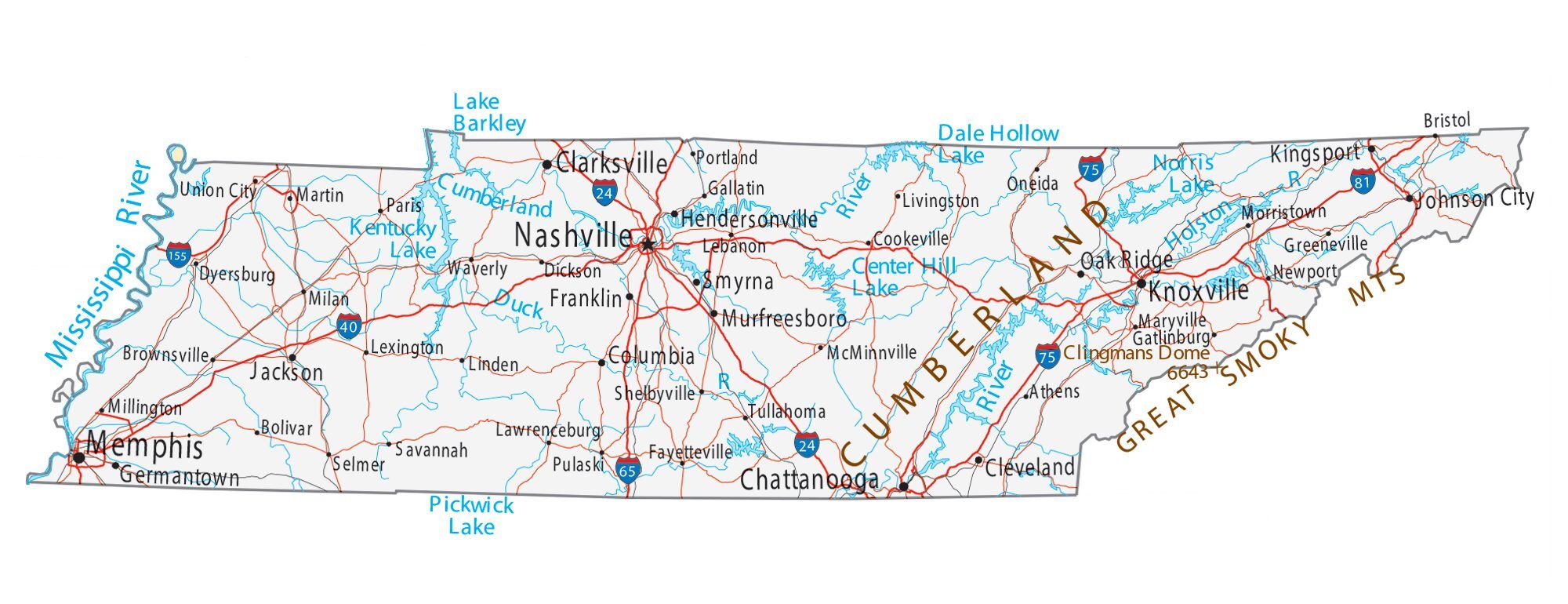
Many major airlines service Tennessee’s four largest cities, Nashville (BNA), Memphis (MEM), Chattanooga (CHA), and Knoxville (TYS), though some flights require connections through other hubs like Atlanta, Dallas, and Charlotte. Once you’re on the ground, three major highways crisscross the state, with I-40 connecting Memphis, Nashville, and Knoxville; I-24 running between Nashville and Chattanooga; and I-65 bisecting the state north to south. These scenic freeways can get you anywhere in the state and offer views of the mountains in the east, the hills of Middle Tennessee, and the gradual flattening of the topography as you approach the Mississippi River on the western border.
Tennesseans love their cars, so urban cores can get crowded during rush hour and on-street parking can be hard to find. Consider, as the locals do, using a commercial garage. This dedication to personal vehicles also means that public transit options are lacking in the major cities, but rideshare services have become a popular alternative.
Food and drink to try in Tennessee
In Tennessee, the best food is based on home cooking. Restaurants like Gus’s World Famous Fried Chicken in Mason and The Loveless Cafe outside of Nashville let southern staples like fried chicken and country ham shine in their humble roots, while spots like The Barn at Blackberry Farm in Walland and Husk in Nashville elevate folksy recipes into gourmet Appalachian cuisine. Each region of the state has specialty foods worth a pilgrimage, including Memphis-style dry ribs, the infernally spicy Nashville hot chicken, and even the unusual vinegar pie from the Tri-Cities in the northeast corner of Tennessee. While not as prolific as Kentucky bourbon, Tennessee whiskey also occupies an important spot in the hearts of many locals.
Culture in Tennessee
Tennessee is generally conservative, though liberal sentiments are more common in urban areas. Music brings everyone together, with major festivals across the state including the Beale Street Music Festival in Memphis, the CMA Fest in Nashville, the Bristol Rhythm & Roots Reunion, and Bonnaroo, a multi-genre music and camping festival in Manchester that’s one of the biggest gatherings of talent and fans in the nation every summer. Visual arts are also important, especially in the major cities of Memphis, Nashville, and Chattanooga, where you can find many worthwhile museums and public art installations.
Can’t miss things to do in Tennessee
Tennessee is known as the home of several important musical styles, with shrines to each one that are well worth visiting. Elvis Presley’s Memphis home, Graceland, is a mecca for fans of the King of Rock ’n’ Roll, while Nashville’s Ryman Auditorium, known as “The Mother Church of Country Music,” still hosts live performances on its fabled stage. In Bristol, the Birthplace of Country Music Museum opened in 2014 with exhibits detailing the legendary 1927 Bristol Sessions, during which recordings by icons like Jimmie Rodgers and the Carter Family introduced the music of Appalachia to the rest of the nation.
Travel Tips
Visitors to Tennessee need to think about covering their skin with sunscreen during the summers, bug spray for the mosquitos that can get a little intense around sunset, and layers of clothing in the fall that can be peeled off as the days warm from chilly to quite pleasant. The state also stretches across two times zones, so be cognizant of that fact if you’re planning to drive from Nashville to East Tennessee.